Skip to content
S
The Book · from Sweatpants Business

You didn't build a business.You built yourself a prison.

The book that turns a business that runs you into an asset that works for you — while you're at the beach, while you're asleep, while you're ignoring your phone on principle.

Instant access — read online, PDF, EPUB · No countdown timers, ever · The door's open tomorrow too — but the kids only grow up once

Sweatpants Business

SweatpantsBusiness

How to escape the prison you built for yourself — and build a business that pays you to live

Yarin Barry
Or scroll. Technically also a step.
11:47 p.m.

11:47 p.m.

11:47 p.m. The kids are asleep, your partner's asleep, even the dog gave up on you. And you're lying there, eyes open, drafting a reply to an email that hasn't arrived yet.

That's your business. It has no business hours. It's up with you in the morning, before the coffee. It rides along in the car, sits down with you at dinner, butts into the middle of a conversation with your kids. They told you you'd be your own boss. They lied. You got a new boss — one who doesn't match your 401(k), doesn't do sick days, and calls on Sunday morning.

And you work. God, do you work. Harder than any employee you know, including the one who complains the most. There's no hour when your day ends. There's “just one last message” at 10:30 at night, and a client who writes “no rush, whenever you're free” — and knows exactly what they're doing. So do you: you'll answer before you brush your teeth.

And after all of it — the hours, the nights, every “one more minute and I'm done” — the numbers don't move. One month scrapes out an uptick, the next is back to treading water. You're grossing more and taking home the same. And quietly, just between you and you, you've already done the math you're not supposed to do: you could've earned this salary as an employee. With a paycheck. With a 401(k) match. With a brain that clocks out at six.

And when someone asks how things are going, you pull out the ready-made answer with the exhausted smile: “Crazy busy, thank God.” They nod, impressed. You wear it like a medal. And you both keep the lie going — because deep down you know: you're not on a roll. You're drowning. In style.

Now, the sentence this whole page exists for:

It's not your fault.

You're not lazy — lazy people don't carry a business on their back for years. You're not “not built for this.” Nobody ever taught you how to build a business, that's all. They taught you a profession. You're an excellent consultant, a coach who knows the work — and one day you found yourself running a business without a single hour of training in running a business. Instead of a map, you got a slogan: “Work hard and you'll make it.” You worked hard. So where's the “making it”?

And here's a more interesting question: if hard work were the way, why does every additional year of hard work leave the numbers in the exact same place? There's an answer. It isn't “try harder,” and it isn't “think positive.” It starts with one small, three-word lie they taught you back in kindergarten — and you run your business by it to this day. The book calls it The Big Con. And from the moment you see it, you can't stop seeing it.

Because you're stuck in a maze. And above the maze stands someone who sees the whole thing from up top — the twists, the traps, the exit. The difference between you and them isn't talent. It's the vantage point.

This book is the vantage point.
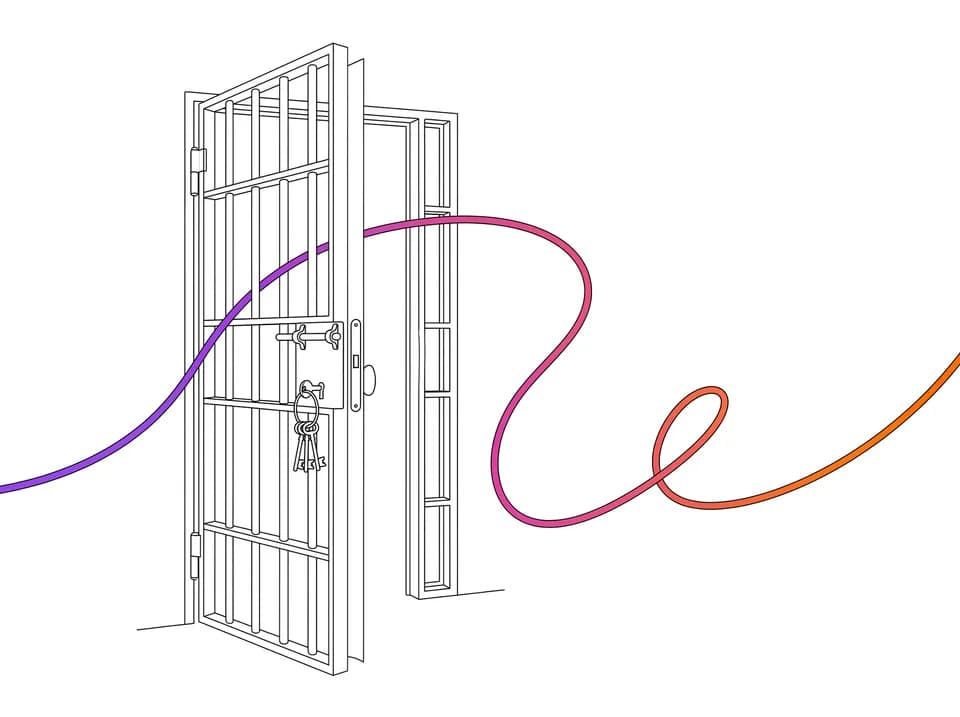
Ink drawing of a heavy barred cell door swung wide open, keys still in the lock; the drawstring streams out through the doorway in a joyful loop.
Roll Call

Cell check. Fine — reality check.

Four warning signs, straight from the book. Tick what's true. We're not judging (audibly).

0/4

Tick away — the verdict updates in real time.

Who Wrote This, and Why You Should Listen

Yarin Barry

$322,298 for a course that didn't exist yet. Not a trick. A method.

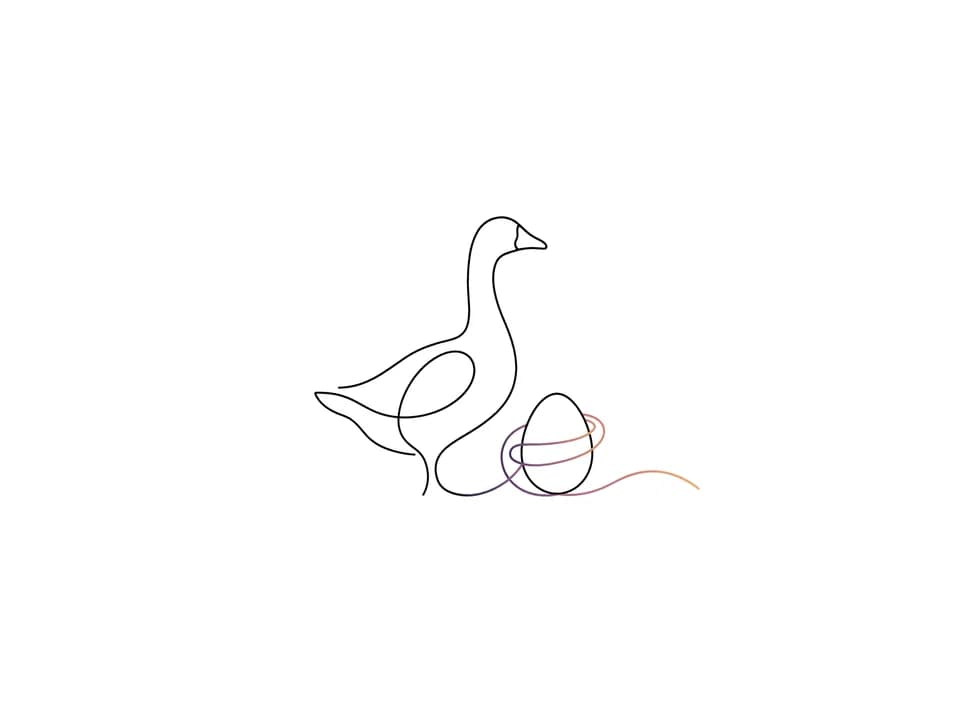
Ink drawing of a goose drawn in a single line standing over its egg; the drawstring gift-wraps the egg at its feet.

Let me tell you about my first digital course. I sold it to 27 people — before I recorded a single lesson. Twenty-seven people paid for a course that, at that moment, existed mostly in my head. Two months later I sold it again: 69 students, this time at $1,485. How many lessons were ready that day? Eight. Out of 24. And by the time the course was finally finished, it had already brought in $322,298.

This isn't a story about nerve. It's a story about one principle: I sold first — produced second. And if you're raising an eyebrow right now, asking “wait, you're allowed to do that?” — the chapter on perfectionism was written for you specifically. Spoiler: “high standards” is the laundered name. The real one gets a whole chapter.

I've been where you are. The nights your head works a second shift, the months revenue flatlined while I ran faster than ever, and the ugly envy of competitors whose product I knew — knew — was worse than mine. I got out. Slowly, through mistakes I paid dearly for. These days I play a few instruments, speak five languages, hold a couple of degrees, and keep a thousand more hobbies waiting in line. Not because I'm special — because I learned early to buy my time back. And today my team and I walk business owners through exactly that move.

In the book, you'll meet a few of them. With numbers, not superlatives:

  • Michelle, a couples counselor whose every dollar used to pass through another emotionally draining session — until, in two months, she turned her method into a digital course. Today roughly 80% of her clients don't require a minute of her time.
  • M., a dating coach who tapped a button in her banking app with a trembling hand, invested $75,000 — and quit her job when the course out-earned her salary. Where'd she get the money? The least glamorous place there is. There's a chapter on that, too.
  • Ben, who started out as a $25-an-hour trainer on park benches — and today runs his own academy and spends most of his time traveling the world.
  • The mortgage consultant who put $25,000 into a mentoring program with no logo, no website, and no contract — and got to $50K a month. Two hours of work a day.
  • Nick, a personal trainer who cut 70% of his sales calls — and that's exactly when he started closing nearly all of them.

And there's the story of my most profitable loss: a campaign that buried $8,500 — and left behind a list of 12,000 people, worth nearly a quarter million dollars in the end. How does a loss become an asset? Chapter 11. You'll get there.

(Full disclosure, in the spirit of the book's CYA clause: let's say every name and number here is made up for illustration. Or changed for privacy. Or they just sound better this way. What matters is that the principles work. And that part you'll test for yourself.)

What's Waiting Inside

19 chapters. Zero mantras in front of the mirror.

Here's a taste of what stays open until you open the book:

  1. 1

    The three-word lie they taught you in kindergarten — the one that keeps you chained to the clock to this day, and why the person buying your time is the one who profits from it most.

    Chapter 6, “The Big Con”
  2. 2

    How to sell a course to 27 people before recording a single lesson — and why the customers actually came out ahead.

    Chapter 9
  3. 3

    The trap that rewards you for sinking into it deeper — and why “it works at first” is exactly the evil part.

    Chapter 7
  4. 4

    Seven kinds of business owners — five cells, one gate out, and one luxury prison with catering. Which cell are you sitting in?

    Chapter 2
  5. 5

    The six income stages of a small business — and why the stage that feels like success is the most dangerous of them all.

    Chapter 3
  6. 6

    “Crazy busy, thank God” — the exact moment that sentence became a badge of honor, and why it's really a symptom.

    Chapter 7
  7. 7

    The difference between a Mirage Business, a Shackle Business, and a Freedom Business — and why the numbers lie here more than anywhere else.

    Chapter 5
  8. 8

    Jonny's story: a Facebook page bringing in $15K a month — erased in one morning, no warning, no appeals desk. And the question worth more than the lesson itself.

    Chapters 5 and 17
  9. 9

    Coach math: how $175 an hour becomes $20K net a month — while you barely touch a thing.

    Chapter 7
  10. 10

    The Four Golden Rules of a Freedom Business — rules that work whether you believe in them or not, exactly like gravity.

    Chapter 8
  11. 11

    The real name of your “high standards” — a defense mechanism with excellent PR, whose whole job is making sure you never go to market.

    Chapter 9
  12. 12

    The thrift that feels like responsibility: why “I'll save now and invest once the business grows” is precisely backwards from how the world works.

    Chapter 10
  13. 13

    The difference between a loan that buries you and a loan that buys money for less than it's worth — and the exact mechanism M. used to finance a dream at $1,000 a month.

    Chapters 11–12
  14. 14

    The four questions of risk management — plus a fifth one nobody bothers to ask. That's the truly scary one.

    Chapter 11
  15. 15

    A three-minute exercise in your banking app that kills the “I don't have it” excuse on the spot.

    Chapter 12
  16. 16

    The Three Sides every dollar that's ever entered your business has passed through — and why all three of yours rest on the same tired head.

    Chapter 13
  17. 17

    The three copies of yourself — SOPs, a ghost crew, automations — and how to duplicate you without hiring a single employee.

    Chapter 14
  18. 18

    AutoMoney: the system that holds a personal conversation with every lead, even at two in the morning — and why the sales call is where the sale ends, not where it starts.

    Chapter 15
  19. 19

    The Golden Goose: the only product on earth whose thousandth copy costs exactly what the second one did — nothing.

    Chapter 16
  20. 20

    The asset no platform wants you to understand — private land in the middle of the city that no algorithm can take away from you.

    Chapter 17
  21. 21

    The Escape Plan: seven steps, each with a 48-hour first action. Not motivation — marching orders.

    Chapter 18
How the Book Is Built

Five parts. One escape route.

From the diagnosis, through the mindset, to the machine itself — and a seven-step Escape Plan with a 48-hour action for every step.

You Didn't Build a Business — You Built Yourself a Prison

Prologue: a warning before use · Welcome to the business trapped inside your head · Seven kinds of business owners — most of them worse off than employees.

The Map — From Prison to Freedom Business

How high does a Freedom Business go · A business isn't a job — it's an income-producing asset · The three kinds of businesses · The Big Con · The Trap.

The New Rules of the Game

The Four Golden Rules · A slave to perfectionism · The thrift that's killing you · An empire out of thin air · The money is within reach — really.

The Freedom Machine

The Three Sides of every business · Stop working the line — start running it like a CEO · AutoMoney · The Golden Goose.

The Great Escape

The asset nobody tells you about — the list and the repeat customer · The Escape Plan, step by step · The next step.

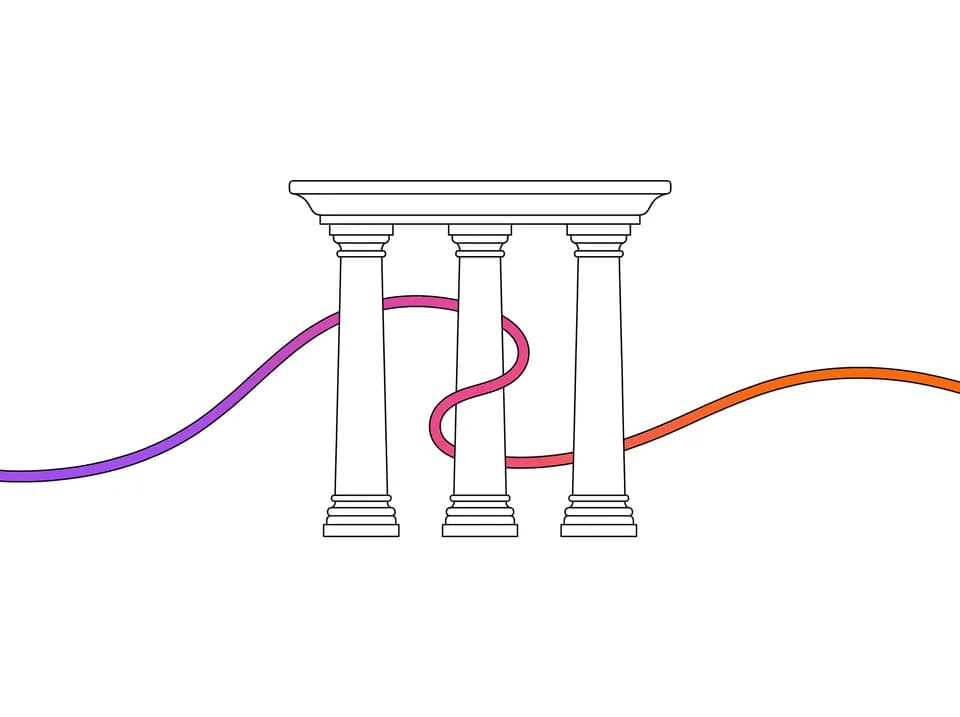
Ink drawing of three classical columns carrying one stone beam; the drawstring weaves in front of and behind the columns — what really holds them together.

And every chapter ends on a hook that won't let go. Start reading at 10 p.m. at your own risk.

From the Book

A taste. No spoilers.

“Maximum revenue. Maximum profit. Minimum work.”

“No one ever said on their deathbed they wished they'd worked more hours.”

“How do I turn money into time?”

“Perfect comes after. Not before.”

“Bad debt funds standing still. Good debt funds growth.”

“Working ON the business, not IN it.”

“Created once. Sold again and again. At almost zero cost per copy.”

“A business doesn't get rich from customers who buy. It gets rich from customers who come back.”

“Go alone, or come with us — but go.”

The Fit Check

Who This Book Is For — and Who It Isn't

This is for you if:

  • You're a solo expert — consultant, therapist, coach, speaker — with a real business and real income that's been stuck on the same number for too many months.
  • Your calendar is packed, and every thought about growth slams into the same wall: there are no more hours in the day.
  • You smell bullshit a mile away, which is exactly why you haven't bought a “system” yet. We can't stand gurus either. This book was written without them.
  • You once did the quiet math — “I could've made almost this much as an employee” — and something in your stomach clenched.

This is not for you if:

  • You're shopping for “a million by Christmas,” abundance energy, or an inspirational poster with a sunset on it. The internet is full of those, most of them free, and worth exactly the price.
  • You're still at the Playing at It stage — an idea, enthusiasm, and zero steady income. The book will give you a direction, but it was written for someone who already has a business to set free.
  • You run a corporation with 200 employees and quarterly reports. There are other books; give them our regards.
  • You're looking for a book that does the work for you. A business book is like a gym membership: the purchase itself hasn't burned a single calorie.
Quick Math

What's an hour of your life worth?

From the book: money is a renewable resource. Time isn't. Let's see what the business is really billing you — honestly. This book is about stopping exactly that bleeding. If it shortens your road by even one week — it's already paid for itself. Several times over.

50

Yes, including “I'll just answer this one email” on Friday night.

You work roughly 1,500 hours a year more than an established freedom-business needs. That's 63 full days. Every year. Off your life.

Let's call it what it is — a job and a half in a “freedom” costume. There's a way out.

Ink drawing of an executive swivel chair with a prisoner's ball and chain shackled to its wheeled base; the drawstring slips into the iron ball's keyhole like a lock-pick.
The Offer

No tricks: it's a book.

Not a “system,” not an “academy,” no pyramid was assembled here. A book that packs in what costs tens of thousands elsewhere in mentoring — the map, the method, and the mindset — for the price of, well, a book.

What you get:

  • The book Sweatpants Business — 19 chapters, 5 parts. From the diagnosis (which prisoner you are and which cell you're in), through the mindset (the Con, the Trap, the perfectionism, the thrift), to the machine itself — SOPs, a ghost crew, the AutoMoney funnel, the Golden Goose, the list — and a seven-step Escape Plan with a 48-hour action for every step.
  • Three formats in one purchase: read online on any device, a properly typeset PDF, and an EPUB for any reading app. No DRM.

Less than what you charge for an hour — for a method that paid for itself to the tune of $322,298.

The price:instead of $247$67

Why the crossed-out $247? Because that's what this page would say if we'd packaged the same material as a “digital program.” We didn't. It's a book, and it costs what a book costs. No timer, no “only 3 copies left,” no price that jumps tomorrow. The price is just the price.

That's where the receipt lands. No surprise newsletter.

Secure checkout via SUMIT · receipt by email · one-time charge, no subscription

Want a taste first? The prologue and two chapters — free

One edition, one “you.” English hands every reader the same pronoun — so this book was written to you, specifically. (The Hebrew original ships in two forms of address; it's that kind of book.)

Rather have someone build the freedom-business with you? Talk to us

Risk Management

No risk — seriously

There's an entire chapter in this book on risk management. Four questions to ask before any investment, and the first of them: what's the actual risk? So let's apply it to this deal, dollar for dollar.

365 days. 100% money back. No questions asked.

Bought it, read it, decided it's not it? One line by email — and every dollar comes back. You get a full year. No forms with twelve fields, no rep trying to talk you out of it.

The only real risk here isn't the book. It's one more year that looks exactly like the last one.

You take a risk on every dollar in your business, every single day. On this book — the risk is on me.

Fair Questions

What people ask before reading

Bottom line

A year from today, a morning will arrive. That's a certainty — mornings, you can set your watch by. Coffee, phone, packed calendar, “Crazy busy, thank God.” The only question is what you'll say to yourself over that particular cup: “what would have happened if” — or “good thing I moved.”

The walls of this prison — the one you built brick by brick out of “if I don't do it, it won't get done” — are lower than they look. And there's a door. It was never locked from the outside. Only from the inside.

The book is the key. The turn is yours.

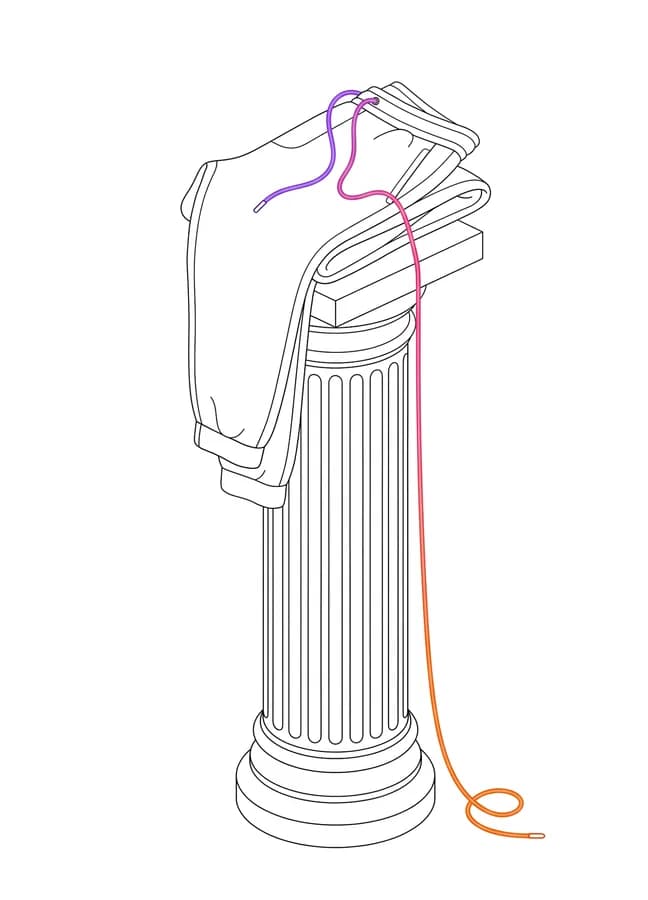
Ink drawing of folded sweatpants displayed on a classical museum plinth like a priceless sculpture; the drawstring spills over the plinth's edge and cascades to the floor.

Want to pair the reading with a real work plan? Let's talk

P.S. There's no timer here, no “only 3 copies left” — a digital book doesn't sell out, and you're too smart for that act. But one thing does run out, every single day: this day, with your kids at this exact age. Nobody prints a second run of that.

P.P.S. Still rolling “I'll grab it when things quiet down” around in your head? There's a whole chapter in the book about that sentence. It's called “The Trap,” and right now you're demonstrating it live.

P.P.P.S. CYA: reading this book may cause long vacations, full nights of sleep, and mild resentment toward every year you worked too hard. Implementation is entirely your responsibility.